

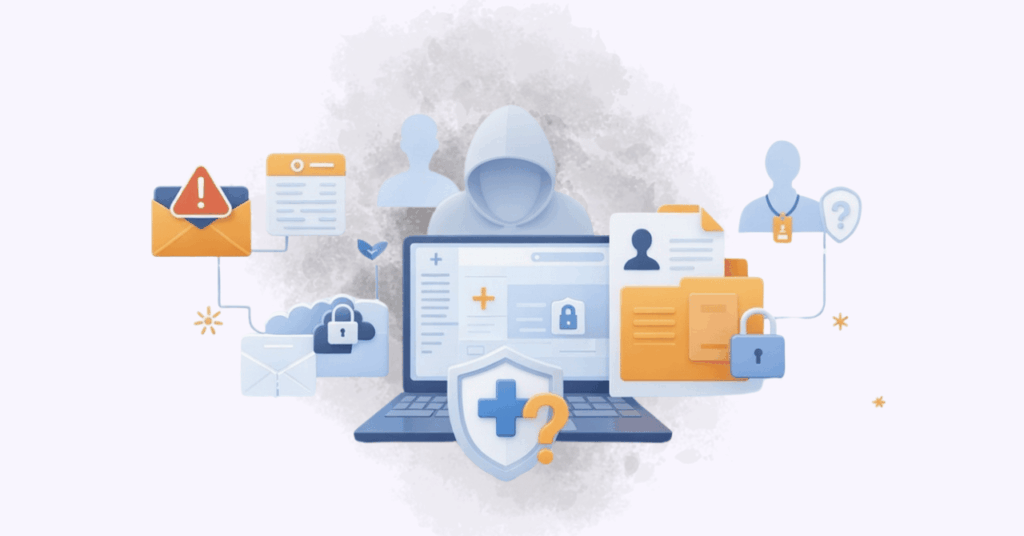
Over the last five years, healthcare data breaches have continued to rise.
HHS reporting shows hacking and IT incidents account for the majority of large breaches. The FBI consistently ranks phishing among the most reported cybercrimes nationwide. Verizon’s breach investigations repeatedly highlight credential abuse and third-party involvement as dominant patterns in regulated industries.
None of this is new.
Healthcare leaders have been hearing about phishing, ransomware, and vendor risk for years.
So here’s the harder question:
If the threats are well known, why do the same protected health information (PHI) exposure risks keep surfacing inside healthcare offices?
The answer usually isn’t a lack of tools.
It’s something far more ordinary — and far easier to overlook.
And that’s where most patient data security strategies quietly break down.
1. Email Is Still the Primary Exposure Channel
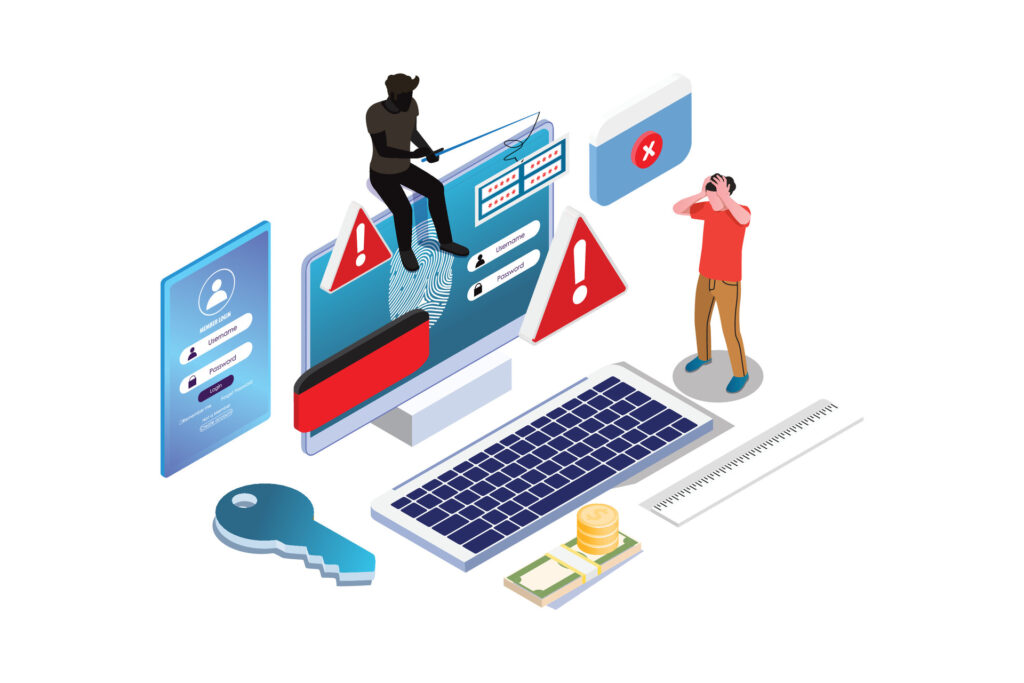
Public breach reporting continues to show that phishing and business email compromise remain consistent entry points in healthcare data breaches.
But the issue isn’t just malicious links.
It’s workflow design.
In many practices, PHI moves through email daily:
- Insurance verifications
- Lab communications
- Billing follow-ups
- Referral documentation
When patient data security depends on perfect attention from busy staff, exposure becomes inevitable.
The underestimated leadership risk?
You may have strong technical controls — but if PHI exposure risks are embedded in routine communication habits, they bypass infrastructure entirely.
2. Credential Abuse and Over-Permissioned Access
Verizon’s breach data consistently identifies credential misuse as one of the top access vectors.
In healthcare environments, that often translates to:
- Shared EHR logins
- Overextended front-desk permissions
- Temporary staff accounts left active
- Role creep over time
Unauthorized access doesn’t always look malicious. Often, it looks efficient.
But over-permissioned systems quietly expand PHI exposure risks.
Mature patient data security isn’t built on trust alone.
It’s built on intentional access boundaries that hold during busy days.
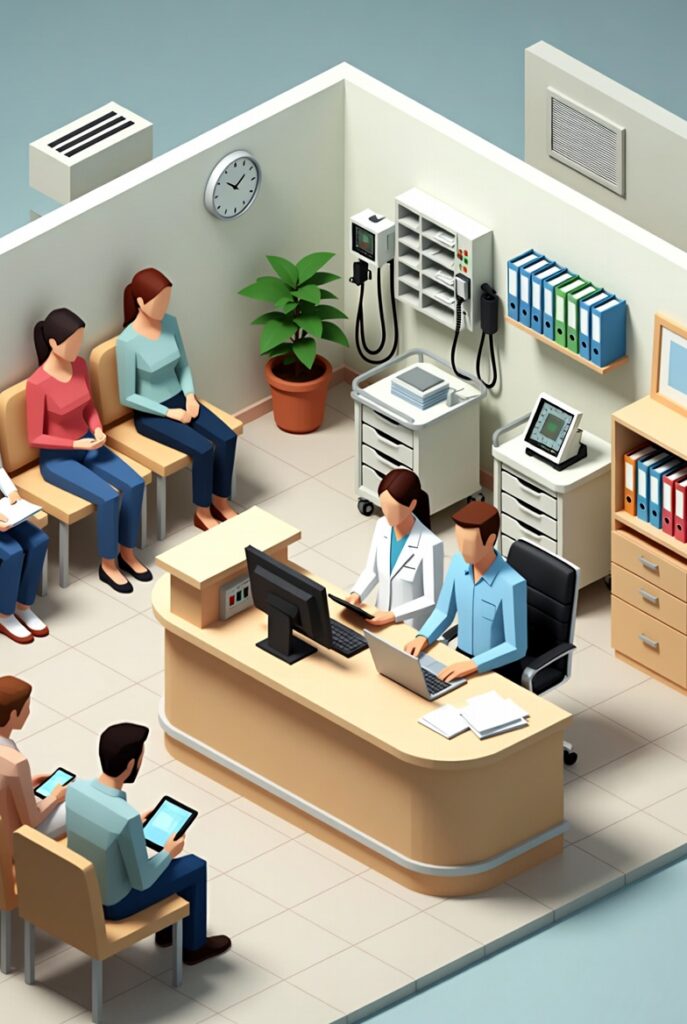
3. Third-Party Involvement Is No Longer Secondary Risk
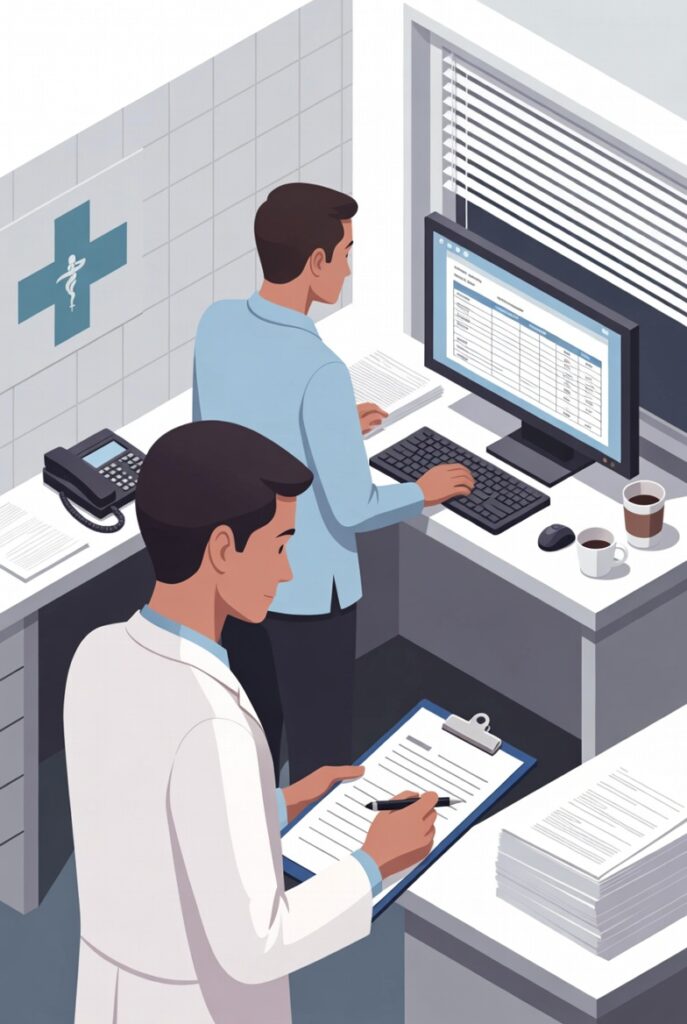
Recent reporting shows a meaningful rise in third-party involvement in breaches.
Healthcare offices rely on:
- Billing partners
- Imaging vendors
- Cloud storage providers
- Managed IT services
- Patient portals
HHS investigations repeatedly identify business associates in large healthcare data breaches.
The leadership blind spot isn’t whether vendors are secure.
It’s whether oversight is structured.
If vendor access is informal, undocumented, or rarely reviewed, PHI exposure risks expand beyond your internal visibility.
And responsibility does not disappear when tasks are outsourced.
4. Exploited Vulnerabilities and Forgotten Systems
Verizon’s DBIR has highlighted growth in vulnerability exploitation — particularly where systems are unpatched or poorly tracked.
Healthcare organizations frequently operate with:
- Legacy imaging systems
- Old VPN configurations
- Dormant servers
- Network-connected medical devices
- Remote access tools left enabled
Many breaches originate from assets leadership didn’t realize were still active.
This is where PHI exposure risks become a visibility issue.
You cannot secure what you cannot see.

5. Paper Incidents Still Trigger Enforcement
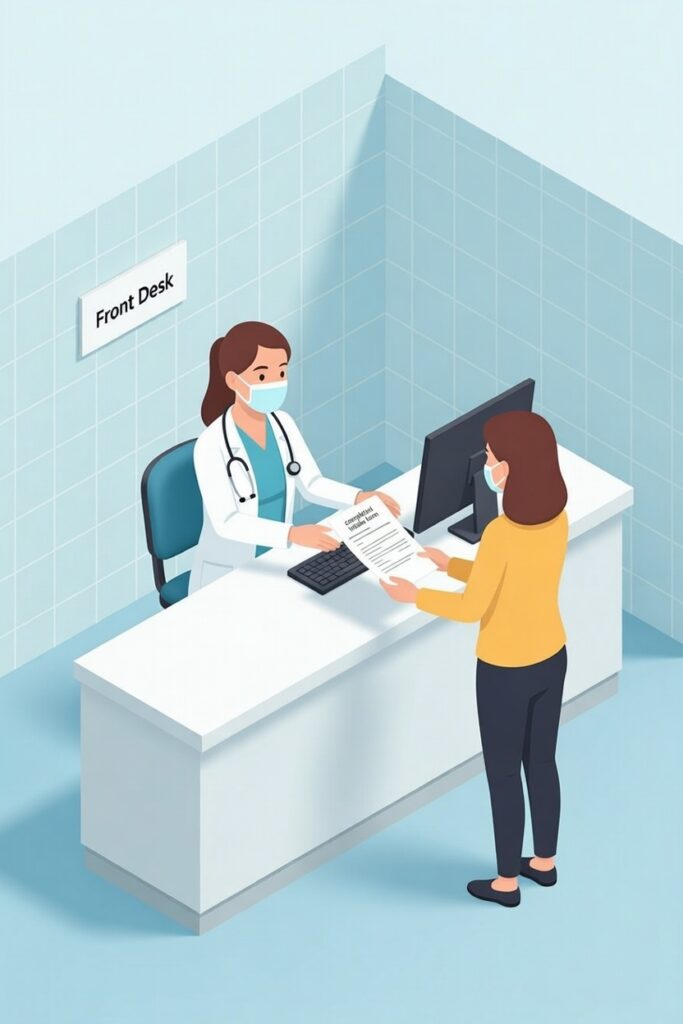
While digital attacks dominate headlines, paper-based exposures continue to generate reportable incidents:
- Misplaced intake forms
- Printed schedules visible at front desks
- Faxes sent to the wrong number
- Improper disposal
These events often trigger patient complaints quickly because they are visible and personal.
PHI exposure risks are medium-agnostic.
The common denominator is control.
6. Ransomware Now Means Data Theft First
Healthcare remains one of the most targeted sectors for ransomware.
Recent breach disclosures increasingly show a common pattern:
Data exfiltration occurs before encryption.
This changes the risk equation.
Backups restore operations.
They do not prevent exposure.
Hacking and IT incidents account for the majority of large healthcare data breaches, and ransomware frequently includes theft as part of the attack model.
Patient data security must now address exposure risk — not just downtime risk.
7. Smaller Practices Are Not Insulated
Public reporting consistently shows small- and mid-sized organizations are heavily targeted.
Common factors include:
- Lean oversight structures
- Informal access reviews
- Limited vendor governance
- Slower response processes
Healthcare data carries value regardless of practice size.
And in smaller environments, operational disruption can be more concentrated.
PHI exposure risks do not scale down with headcount.
What Strong Patient Data Security Actually Looks Like
Reducing PHI exposure risks isn’t about adding more tools.
It’s about strengthening visibility — and building a structured approach to IT oversight that aligns with leadership priorities.
Healthcare organizations that reduce breach likelihood tend to:
- Map how PHI flows across systems and vendors
- Restrict access based on role necessity
- Conduct recurring access reviews
- Audit dormant systems annually
- Formalize vendor oversight processes
- Run realistic phishing simulations
- Align IT oversight with leadership review
The strongest environments aren’t reactive. They are intentional.
The Leadership-Level Question…
If you review breach data from the past five years, one pattern stands out:
The technical mechanisms vary.
The operational weak points repeat.
So the real question isn’t:
“Are we protected?”
It’s:
“Do we have visibility into how patient data actually moves through our practice — and where it could leave without us knowing?”
That’s where PHI exposure risks either shrink — or quietly grow.

Frequently Asked Questions
1. What are the most common PHI exposure risks in healthcare?
The most common PHI exposure risks include phishing, credential misuse, unauthorized internal access, third-party/vendor exposure, and exploited vulnerabilities.
2. Are most healthcare data breaches caused by ransomware?
Ransomware plays a major role, but many healthcare data breaches begin with phishing or credential compromise before ransomware is deployed.
3. How do vendors contribute to PHI exposure risks?
Vendors may retain unnecessary access, operate unpatched systems, or lack structured oversight — expanding exposure beyond internal controls.
4. Do backups eliminate patient data security risks?
No. Backups restore systems after an attack but do not prevent stolen PHI from being exposed or sold.
5. How often should PHI exposure risks be reviewed?
At minimum annually — though mature organizations incorporate ongoing access reviews and vendor oversight into routine governance.