

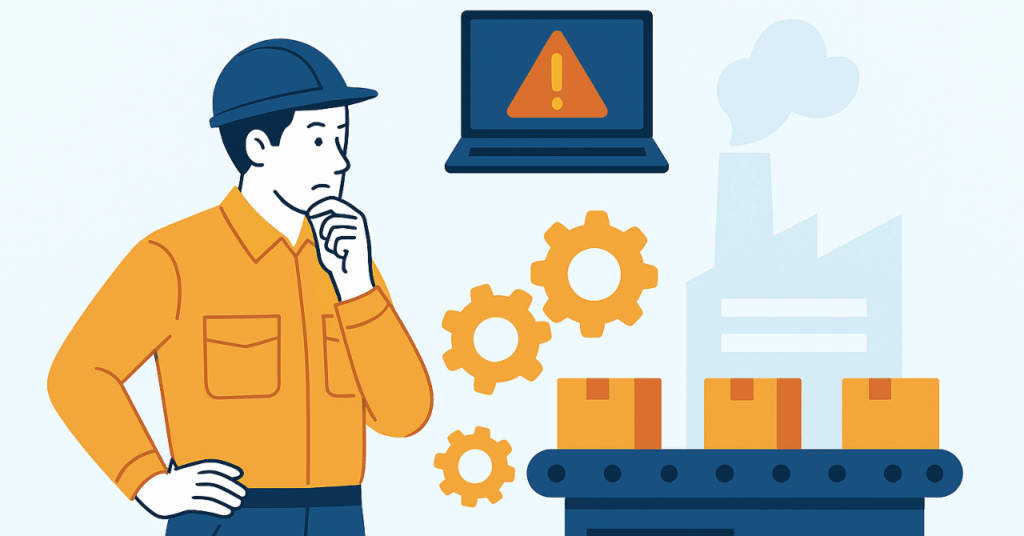
The operational cost of downtime rarely starts with something dramatic.
It’s usually the “small” stuff—the system that lags, the network that stutters, the update that wasn’t supposed to cause issues.
Until it does.
For Omaha manufacturers, downtime doesn’t show up as a headline problem. It shows up in moments that feel manageable—until crews are waiting, schedules slip, and shipping windows get tighter than expected.
That’s when it becomes something more.
And when there’s noticeable strain in operations, it’s not just about lost revenue. It’s the ripple effect—idle teams, rushed decisions, strained supplier relationships, and the kind of reputational damage that builds from issues that never seemed big enough to stop production in the first place.
Why Downtime Hits Manufacturing Harder Than Most Industries
Manufacturing environments don’t pause gracefully.
When IT systems slow down or go offline, production lines don’t “catch up later.” Labor stays clocked in. Equipment sits idle. Materials pile up. Schedules compress.
Even short IT disruptions — including slow systems, delayed file syncing, and intermittent network instability — can rapidly become costly for small and midsize businesses (SMBs). Independent research shows that even brief outages can cost SMBs between $137 and $427 per minute, which equates to $7,620 to over $25,000 per hour, once lost productivity, revenue impact, and recovery efforts are included.
For manufacturers operating with tight margins and continuous workflows, downtime multiplies fast.
The Real Financial Cost of Manufacturing Downtime
Across manufacturing sectors, downtime consistently ranks as one of the most expensive operational risks.
Recent industry data shows:
- $260,000 per hour is the average cost of unplanned manufacturing downtime across sectors
- Small manufacturers lose $137–$427 per minute during outages
- Manufacturers average 30 hours of lost production per month — more than 360 hours annually
- 60% of manufacturers report downtime costs exceeding $250,000 per year
Even localized Omaha manufacturers feel this pressure, especially those tied into agricultural, transportation, engineering, or industrial supply chains. One delayed shipment can jeopardize an entire vendor relationship.
The Hidden Costs Leaders Often Don’t See
Most downtime calculations stop at “lost revenue.” That’s only part of the picture.
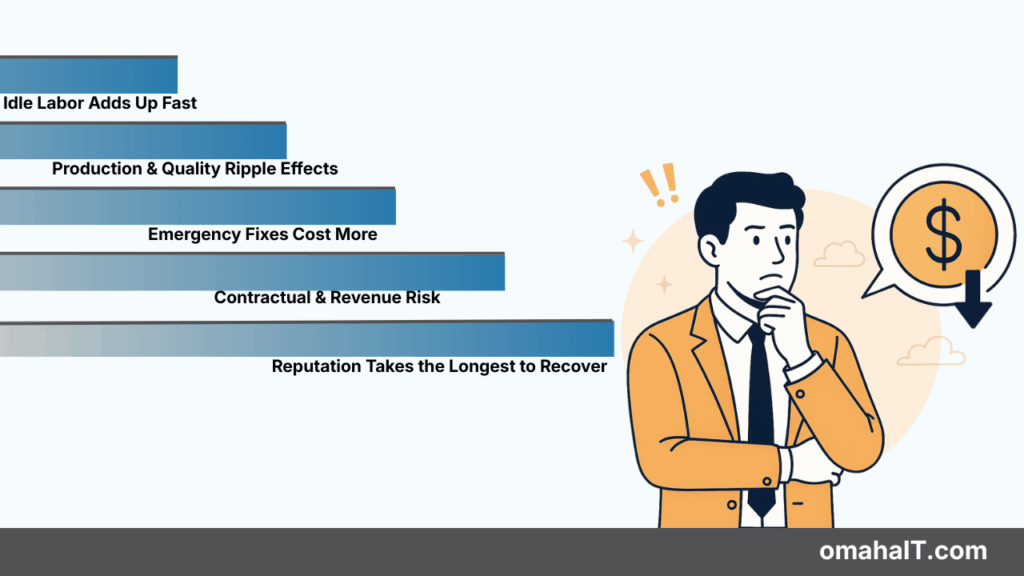
1. Idle Labor Adds Up Fast
If 25 employees sit idle for four hours, that’s 100 labor hours lost — before recovery even begins. Across manufacturing, productivity losses are often 2–3× higher than the actual repair cost.
2. Production & Quality Ripple Effects
More than half of manufacturing leaders report that downtime leads to missed shipping targets and quality issues. When reporting systems lag or troubleshooting drags on, bottlenecks cascade through the operation.
3. Emergency Fixes Cost More
Emergency repairs often cost 3–4× more than planned maintenance. Overnight shipping, rush labor, and temporary workarounds inflate what should have been manageable fixes.
4. Contractual & Revenue Risk
Missed deadlines can trigger penalties, withheld payments, or lost future contracts. In some cases, preventable outages can even complicate cyber insurance claims.
5. Reputation Takes the Longest to Recover
Nearly half of organizations report long-term reputational damage from downtime. For manufacturers working with enterprise or government buyers, regaining trust is slow — and expensive.
What “Prepared” Actually Looks Like
Prepared manufacturers tend to share a few characteristics:
- Visibility into system health before failures occur
- Documented recovery plans that don’t rely on heroics
- Tested backups and known recovery timelines
- Clear escalation paths when issues surface
- IT aligned to production priorities — not just uptime metrics
The goal isn’t perfection. It’s predictability.
From Unplanned Disruptions to Operational Visibility
If downtime feels unpredictable in your environment, the first step isn’t a purchase — it’s clarity.
Understanding where risk actually lives inside your operation often reveals that many “unexpected” outages are anything but.

Frequently Asked Questions
1. How much does downtime cost manufacturers per hour?
Manufacturing downtime can cost anywhere from $8,000 per hour for SMBs to hundreds of thousands per hour depending on scale, labor, and production impact.
2. What causes the most downtime in manufacturing?
Common causes include hardware failures, network outages, software issues, cyber incidents, and human error — often compounded by delayed reporting.
3. Why is downtime more expensive for SMB manufacturers?
SMBs typically lack redundancy. One failure can halt the entire operation, with fewer backup systems to absorb the impact.
4. Can proactive IT really reduce downtime?
Yes. Studies consistently show 30–50% reductions in unplanned downtime with proactive monitoring, maintenance, and planning.
5. Is downtime mostly an IT problem?
No. Downtime is an operational issue with financial, workforce, and customer impacts — IT is just one part of the system.